Floor Varnish vs Floor Oil: Which Is Better?
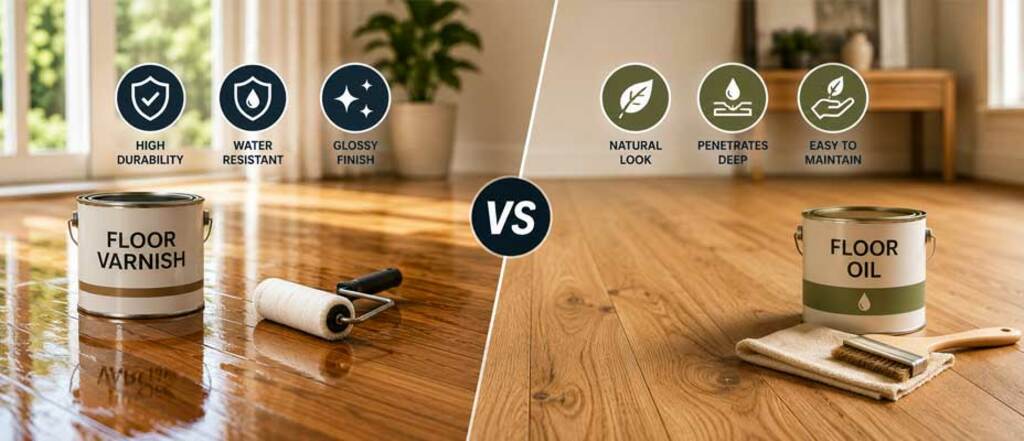
Choosing between floor varnish and floor oil is one of the most important decisions you'll make when finishing wooden floors in your home. Both products protect your wood and enhance its appearance, but they work in fundamentally different ways. Floor varnish creates a hard, protective layer on top of the wood, whilst floor oil penetrates the grain, enriching the natural beauty whilst protecting it. Understanding these differences will help you select the most suitable option for your lifestyle and home.
What Is Floor Varnish?
Floor varnish is a surface coating that sits on top of your wooden floor, forming a protective barrier. This transparent finish hardens as it cures, creating a durable shield against scratches, spills and general wear. Varnish typically contains resins, solvents and hardening agents that bond together to form a tough, elastic layer. Available in various sheens—from matt to high gloss—varnish dramatically transforms the appearance of wood whilst offering excellent protection. Most homeowners apply two to three coats for optimal durability.
What Is Floor Oil?
Floor oil works differently by absorbing directly into the wood's cellular structure rather than sitting on the surface. Natural oils like linseed, tung and Danish oil nourish the wood from within, enhancing grain patterns and colour whilst providing moisture resistance. The oil hardens slightly as it oxidises, creating a natural, matte appearance that feels warm underfoot. This method requires regular maintenance but offers a more subtle, organic aesthetic.
Key Differences Between Varnish and Oil
Durability and Protection
Floor varnish outperforms floor oil in terms of raw durability and protection strength. Varnish creates a hard, impermeable surface that resists scratches, dents and water damage far more effectively than oil. In high-traffic areas like hallways and kitchens, varnished floors maintain their appearance longer without requiring recoating. However, varnish can eventually peel or crack if subjected to excessive impact or moisture, requiring complete removal and reapplication rather than simple refreshing.
Floor oils provide adequate protection for moderate-traffic areas but struggle under heavy use. Oil-finished floors are more susceptible to water rings, scratches and staining. However, damage to oil-finished floors is often more superficial and easier to remedy through localised treatment rather than wholesale replacement.
Maintenance Requirements
Maintenance demands differ significantly between these two finishes. Varnished floors require less frequent intervention—typically just regular vacuuming and occasional mopping with a specific hardwood floor cleaner. Deep cleaning and recoating become necessary every 5-10 years, depending on traffic levels.
Oil-finished floors demand more hands-on care. You'll need to refresh the oil annually, sometimes twice yearly in high-traffic zones, applying fresh coats to maintain protection and appearance. This ongoing maintenance commitment appeals to some homeowners who enjoy nurturing their floors but frustrates those seeking a low-maintenance solution.
Appearance and Aesthetics
Varnish dramatically enhances wood's colour and grain, offering a polished, refined appearance. High-gloss varnish creates mirror-like reflections that brighten rooms, whilst matte or satin finishes provide contemporary elegance. The finish is visibly protective and undeniably glossy, which some find beautiful, and others find artificial.
Oil provides a more subtle, natural-looking finish that celebrates the wood's authentic character. The matte appearance feels organic and warm, highlighting grain patterns without artificial shine. Many homeowners prefer this aesthetic for period properties or naturalistic interiors, though it lacks the transformative visual impact of varnish.
Comparing Performance in UK Conditions
Moisture and Humidity Resistance
British homes deal with significant moisture challenges due to our damp climate. Varnish performs better in these conditions, creating a moisture barrier that prevents water absorption and subsequent swelling or warping. This makes varnish particularly suitable for kitchens, bathrooms and ground-floor rooms where moisture exposure is higher.
Floor oil provides less protection against humidity fluctuations. The wood can still absorb and release moisture, causing seasonal expansion and contraction. Whilst this movement is natural and manageable with quality subfloors, it's a consideration in properties with damp issues or poor ventilation.
Temperature Stability
Varnished floors handle temperature variations well, maintaining their protective seal regardless of seasonal changes. Oil-finished floors naturally respond to temperature fluctuations, which can cause minor surface texture changes. This isn't necessarily problematic, but requires acceptance of the floor's living, breathing nature.
Cost Analysis: Initial Investment and Long-Term Value
Initial Application Costs
Varnish typically costs less initially than oil, both in material expenses and application labour. Professional varnishing averages £15-25 per square metre, whilst oil application runs £10-20 per square metre. However, varnish preparation involves sanding and dust containment, which may increase total project costs. A DIY application is possible with varnish but requires patience and skill to avoid brush marks and drips.
Oil is more DIY-friendly—many homeowners successfully apply floor oil themselves using simple mops or rollers, reducing labour costs significantly. This accessibility appeals to budget-conscious householders.
Long-Term Maintenance Costs
Varnished floors require recoating every 5-10 years at an average cost of £10-15 per square metre. This infrequent maintenance minimises disruption and expense over time.
Oil-finished floors demand annual maintenance costing £5-10 per square metre, totalling substantially more over a decade despite lower unit costs. However, you're never faced with expensive, disruptive full recoating projects.
Practical Considerations for Different Rooms
Kitchens and Bathrooms: Varnish is the superior choice here. Water and spill exposure demand the protective barrier that only varnish provides. Oil simply cannot withstand kitchen humidity and liquid incidents.
Living Rooms and Bedrooms: Both options work well in low-moisture areas. Your choice depends on aesthetic preference and maintenance willingness. Oil suits those valuing natural beauty; varnish suits those prioritising appearance longevity.
High-Traffic Hallways: Varnish maintains its appearance longer under constant footfall. Oil-finished hallways show wear more quickly and require more frequent refreshing.
Making Your Final Decision
Choose Varnish If You Prefer:
- Maximum protection and durability with minimal maintenance requirements
- A glossy, polished aesthetic that transforms the room's appearance
- Suitability for kitchens, bathrooms and high-traffic areas
- Less frequent intervention and reapplication cycles
- Water and scratch resistance that withstands family life
Choose Oil If You Prefer:
- A natural, understated appearance celebrating authentic wood grain
- Lower initial costs and easier DIY application
- A living finish that can be refreshed, localised rather than completely stripped
- The feel and experience of working with natural products
- Use in low-traffic, low-moisture areas primarily
For most homeowners, varnish offers the practical advantage of durability and low maintenance, making it the safer choice for active households and moisture-prone areas. However, if you value natural aesthetics and don't mind regular maintenance, floor oil provides genuine character and warmth. Many homeowners compromise by using varnish in high-traffic and wet area,s whilst applying oil in bedrooms or living spaces, creating a balanced approach tailored to actual usage patterns throughout the home.
